
Past events
ICUR 2020
The eighth International Conference of Undergraduate Research took place on the 29th & 30th September 2020. Students presented their research at their home university campus or remotely in video-linked sessions with our partner universities around the world. New mode of digital delivery! Due to its existing digital infrastructure, ICUR was in a unique position to pivot the mode of delivery in order to accommodate COVID-19 pandemic restrictions and host the conference via Zoom webinar and the newly developed ICUR App. Even in this difficult year, ICUR 2020 continued to facilitate and encourage interdisciplinary networking and discussion for undergraduates from around the world. Audience, presenters and organising committee joined the conference virtually through the ICUR App, where they watched, participated, interacted and asked questions without leaving their homes. In 2020, no matter which time zone they lived in, participants had access to any panel taking place while they were logged in to the App. Each ICUR spoken presentation session hosted four presenters, each delivering a ten-minute presentation on their research, followed by five minutes of individual question time each. The digital international poster sessions included students from a selection of participating institutions who presented posters and audio voice-overs, with a live question time accompanying each poster, running throughout the conference via the ICUR App.ICUR App
New for ICUR 2020, the ICUR App was the central location where presenters, local organisers, and audience members found all the information needed to navigate and attend the conference virtually. Through the App anyone could participate, interact, vote and ask questions of the virtual posters and spoken panel presentations without leaving their home. During the 48-hour conference, no matter which time zone they lived in, audience members who registered in the App were able to browse abstracts, presentation titles, research streams, and presentation schedules to find sessions which were of interest to them, and link to the relevant webinar at the appropriate time. Audience members viewed the presentation sessions and were able to ask questions via the Zoom webinar Q&A function. The international digital poster presentation sessions were accessible throughout the conference, the posters came with accompanying audio voiceovers and the question and answers function. The App allowed users to create a profile and create personalised schedules, make notes, vote for best presentation and elect to send and receive messages to and from other attendees.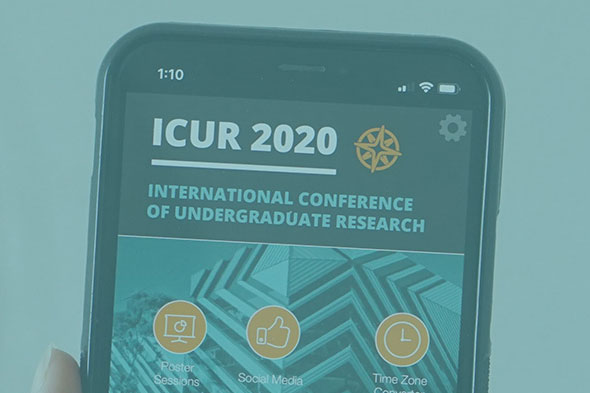


Participating Institutions
University of Warwick
Monash University (Melbourne and Malaysia campuses)
Baruch College, City University of New York
CY Cergy Paris University
Nanyang Technological University, Singapore
Pompeu Fabra University, Barcelona
Stellenbosch University
University of British Columbia, Canada
University of Leeds, UK
University of Ljubljana
University of Nebraska – Lincoln
Vrije Universiteit Brussel, Belgium
Keynote Speaker
ICUR 2020 welcomed Helen Keen as keynote speaker. Helen is an award-winning performer and popular-science writer. In her BBC Radio 4 show about history and development of human spaceflight, “It is Rocket Science”, Helen combines science with comedy. The critically-acclaimed show won the 2013 WISE Media Award and was nominated for 2015 Writers’ Guild of Great Britain. During her career, she has hosted first live comedy night at CERN in Switzerland and was featured in a National Geographic series, StarTalk with Neil deGrasse Tyson where she talked about making connections between pop culture and science. Her innovative approach to factual matters was recognised by WIRED magazine who appointed her as an Innovation Fellow.
Student Directors

Ala Lysik
At the time of her Student Directorship, Ala was studying Law at the University of Warwick. Ala took part in ICUR as she greatly appreciated the importance of academic research. In addition shen had previously conducted research about contemporary Jewish and Lemko minorities in Poland as a part of the competition for an educational research project organised by Wroclaw’s Centre for Community Development. The aforementioned experience, combined with the research nature of her degree, reiterates Ala’s interest in developing and engaging in opportunities like ICUR. Furthermore, Ala strongly believe in the interdepartmental cooperation that ICUR promotes. During her time as a President of the Warwick Women’s Careers Society, Ala noticed how important it is to cultivate cooperation between different fields. Ala believes this fosters the development and allows the students to explore subjects they wouldn’t have thought of exploring before. She was particularly impressed by the fact that ICUR brings together students and researchers from all disciplines which ultimately allows the conference to become a celebration of research in general.
Abdullah Khan
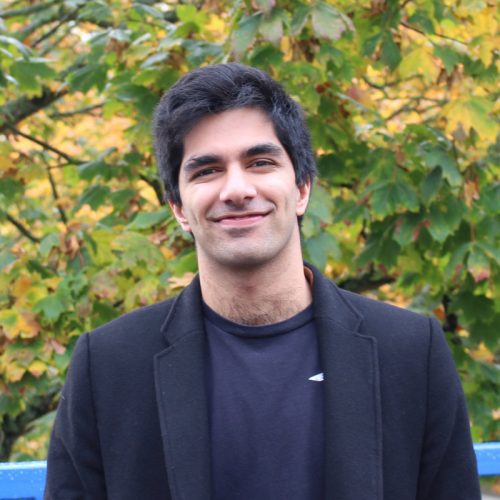
During his time as a Student Director Abdullah was studying Psychology at the University of Warwick. Abdullah had a strong history of participating in research, signing on as a research assistant in his first year and participating in the URSS (Undergraduate Research Support Scheme) during the summer of his first year. Abdullah’s work was focused on creating Virtual Reality Environments which could be used to test participants for environment recognition. He often had to collaborate with members of WMG to create the virtual environments, which he found enlightening, allowing him to understand that research into a topic can spread into many fields and requires cooperation between the members of several fields in order for research to be practically applied in diverse situations. Abdullah joined the ICUR as a student director as he believed that ICUR can help individuals to broaden their horizons and expand the fields they work in, and that working in an interdisciplinary environment allows for innovation and spawns a new level of creative problem solving.

David Almasi
At the time of his Student Directorship David was studying PPE at the University of Warwick, and so was introduced to the idea of multidisciplinary early on. David believed ICUR is unique in the sense that it does not only offer the framework for researchers from all disciplines, but the organisation team actively encourages dialogue between them. As a part of the ICUR Student Director Team, he was responsible for making sure that research submissions fulfil the standards of the conference. David worked to ensure that applicants received high-quality feedback to encourage their academic improvement.
Mélissa Chan-Cheape
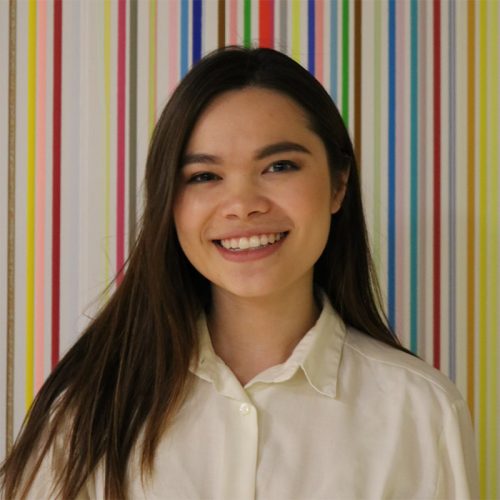
During her Student Directorship Melissa was reading Hispanic Studies and French. She believed that communication is key in any sphere of life, and that the sharing of ideas is the fundamental catalyst to social growth and development. The reason Melissa wanted to be part a Student Director at ICUR was because she believed that the exchange of ideas in an interdisciplinary environment is the perfect way to encourage students to showcase their own research. It gives them the power to create something new and exciting, bringing it to an international platform of individuals who are ready to be enlightened.
Brooke Maat
At the time of being a Student Director Brooke Maat had completed her first undergraduate degree of a Bachelor of Science majoring in Physiology and was completing her Bachelor of Health Science honours. Brooke had presented at the ICUR 2019 conference and participated in Monash University’s Global Leadership and Advanced Research Program which is where her passion for undergraduate research began. As Student Director Brooke enjoyed encouraging other students with their undergraduate research, as she believes it builds inter-disciplinary skills, communication, personal development and collaboration with students both locally and internationally.
Ryan Buhagiar
At the time of being an ICUR Student Director Ryan was studying Biomedical Science within the faculty of Medicine, Nursing and Health Sciences and an Undergraduate Research Fellow with Monash CURIE and presented at ICUR 2019 as part of an interdisciplinary project team. Ryan’s experience with ICUR broadened his perspective on research and allowed him to develop a repertoire of transferable skills. Due to ICUR Ryan felt more confident in his ability to disseminate complex ideas in a collaborative environment. As ICUR Student Director he was and is passionate about encouraging and supporting other undergraduate students to engage with extra-curriculum activities that promote and encourage collaboration and inclusion.