
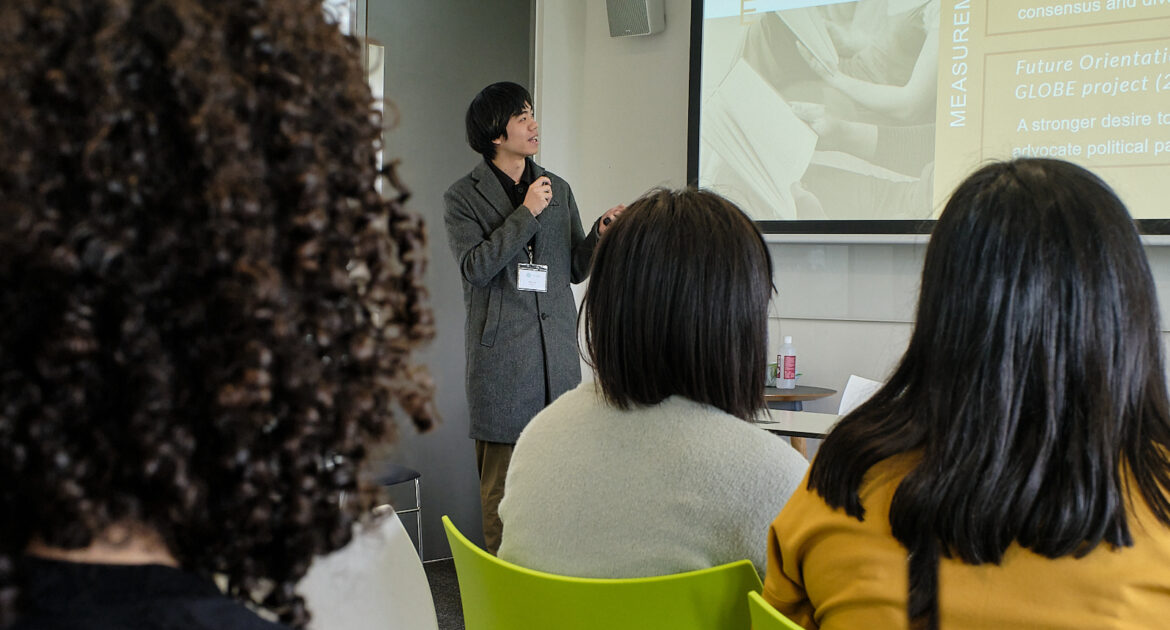
Spoken presentations

01
Prepare
The first and most vital step in giving an effective spoken presentation is to conceive and plan your content carefully. You have undertaken a research project which has most likely involved a lot of very specific and detailed work, and you now have 10 minutes to convey this information to an audience. 10 minutes isn’t long, so you’ll need to conceptualise your research to best engage your audience with memorable and informative key points. Conceptualising your research in a clear and well-thought out way that will help your listeners to remember the key information from your work. It may be helpful to plan your presentation in terms of the story you want to tell about your research – a story that has a beginning, middle and an end. List the key ‘takeaways’ that you want to get across to your audience at the end. What do you want them to remember? What is your particular contribution, and what impact will it have? ICUR’s audience is international and interdisciplinary, consider the language used and the multidisciplinary nature of the audience. Presentations need to be considered in terms of the individual circumstances of the conference and audience: one size does not fit all.
02
Prioritise
How does your research fit into the wider picture for your subject area, or the world at large? Each piece of research, no matter the size and scope, fits into a broader area of investigation or impact, and to engage an audience, drawing out these broader conversations or areas of impact is key. What are your key points? What are you telling the audience? What do you want the audience to take away from your presentation? These key points form the backbone of your presentation and should be what you prioritise when writing your presentation and choosing how to illustrate these points within your materials. Consider signposting how you will move through you presentation at the outset and throughout your presentation delivery. A mapped path helps your audience to stay attentive and to know where they are in the story that you are telling. Consider how you will indicate transitions between these points, both in what you are saying and what you are showing to your audience.
03
Practice
Practice is essential for an effective presentation. What technique will you use? Notecards, memorisation, or a combination of both? An effective method of presentation often involves delivering the presentation from memory, using only brief prompts on notecards or within your PowerPoint slides. Moving from one part of the story to the next can help you remember the key points to get across and the supporting information you want to communicate. Practicing your ICUR presentation to friends, flatmates, fellow ICUR presenters or staff members, particularly to those outside of your field of study, will help you to remember your key points but also test how well your presentation is understood by an international and interdisciplinary audience. Run through your presentation multiple times to a variety of people.
04
Present
Remember ICUR is the first time many students will have presented at a conference and it is a supportive and constructive environment – so don’t be nervous! Use our Past Events archive to get a feel for what the conference is like and take advantage of local training and practice sessions before the event to help you feel as comfortable and prepared as possible. Preparation is the best antidote for pre-presentation nerves! Speak clearly and more slowly than you would normally in conversation. Relax, breathe and allow yourself to move naturally (within the confines of the camera filming you for the international audience). Vary your eye contact between friendly faces in the audience at your home institution and the video camera connecting you to the international audience on the other side of the conference call.