In traditional academic settings, conference presentations tend to take one of two forms:
- Spoken presentation – a research paper summarising findings, delivered orally, and often accompanied by slides or other visual aids. Spoken presentations take place in a variety of settings, but a standard conference paper will typically be scheduled in a panel and followed by a Q&A session where audiences can ask you questions.
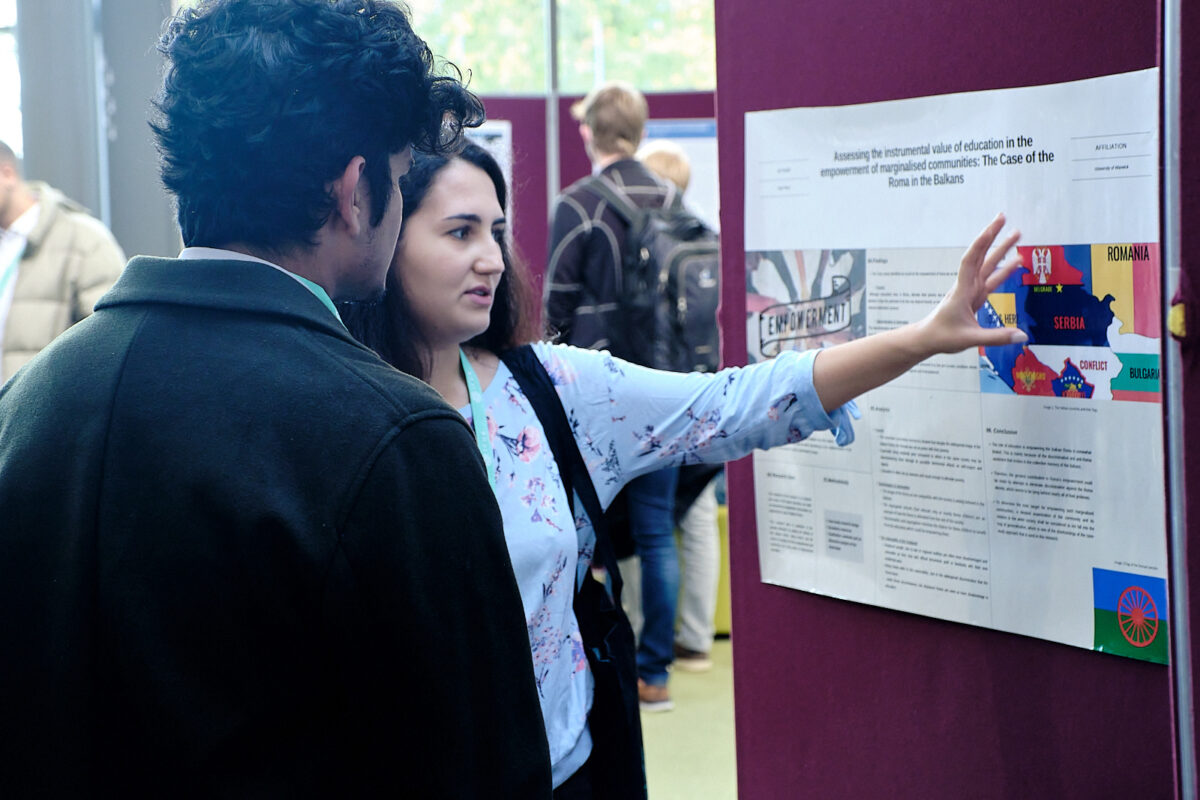
- Poster presentation – a visual presentation offering an overview or summary of research which audiences can survey at their leisure. Although conferences will often expect you to be present with your poster to speak to audiences about your research and answer their questions for at least a short period of time, a poster should also communicate your research effectively as a standalone piece.
However, it is acknowledged increasingly that these are not the only – nor always the most effective – ways of presenting research findings in an academic conference setting.
At ICUR, we want to support you to present your research to the world in a way that is most appropriate and makes the most sense for you, your findings, and your goals. “Alternative” forms of presentation are not “other” or “lesser” – they are distinguished from the traditional spoken and poster presentation formats here to allow us to collect information regarding space, resources, and other support that might be necessary in order for us to facilitate these presentations at the conference.
Maybe your research would be more effectively shared in the form of:
- A performance
- A short film
- A documentary
- An visual art exhibit
- A workshop
- A virtual reality experience
- A spoken word poem
- A boardgame
- An interactive model
- A podcast
- A piece of music
- A demonstration
- A model
- …?