
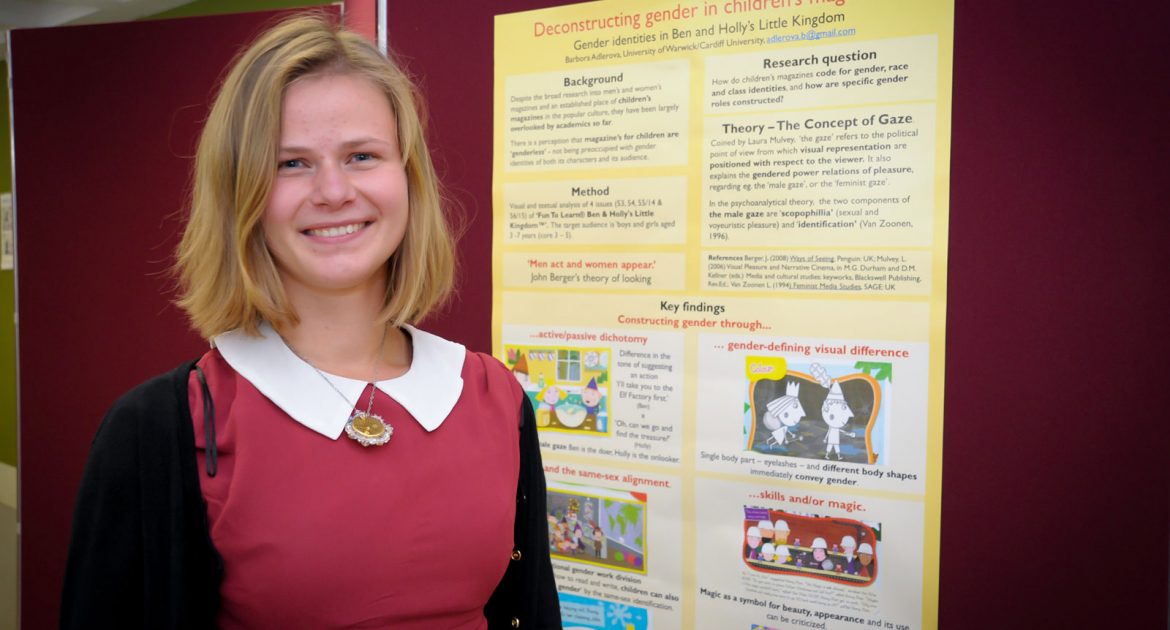
Ensure you have your audience in mind at all times. ICUR is a multi-disciplinary, international conference. You need to ensure that your presentation or poster is accessible to those who study in the same area as you and those who don’t and that you fully explain anything that might not be obvious to an overseas audience. Considering the international nature of the conference it would also be appropriate to consider the international influences on and implications of your research. Please ensure that you have considered any intellectual property rights issues and have spoken with a member of staff if you are working jointly on a project to ensure that your presentation of the research is appropriate.
Whether your presentation is via an oral presentation or a poster it should essentially answer four main questions:
Why?
What?
So what?
Now what?
Day and Peters (1994), “Quality Indicators in Academic Publishing”, Library Review, 43, 7
If your work originated as an essay, you will have been given the title so you can just get started with addressing the question. This is not the case when presenting your own research, so you need to start by saying why your subject is important and why you want to study it. Don’t be tempted to launch into your presentation or poster saying what you did and what the results were, offer some context, give some background and let your audience know what your research questions were and why they are important.
You can then move on to what you did. The way you tackle this will depend on your research and your subject area but you should ensure that your presentation or poster progresses logically and doesn’t jump around. Let your audience know how you went about your research, why you decided to conduct the interviews / experiments / analysis that you did, who / what was involved in your research, what were your results and what was your analysis of those results. Always have your audience in mind when you’re preparing your presentation and ensure you are doing all you can to help them understand your research.
Next, you need to tell your audience what your results mean and what your analysis of them has shown. Explicitly, what are the answers to your research questions? What are your conclusions? What effect has this had / could it have on your discipline? You don’t want you leave your audience wondering why they attended your presentation and what they have gained – asking ‘so what?’.
And finally, ‘Now what?’ – have your discoveries opened up further questions for research, or have you produced something which is self-contained and doesn’t need further study? Are you continuing with your research? Other people listening to your presentation might have been inspired to carry out their own research so let them know what further questions you think your research has raised.
You will only have a short time to present your research, whether orally or by poster, so although we recommend covering all of the aspects mentioned above you will necessarily only touch on some areas while going into more detail on others. Please remember to acknowledge the support or involvement of members of staff in your research if appropriate.