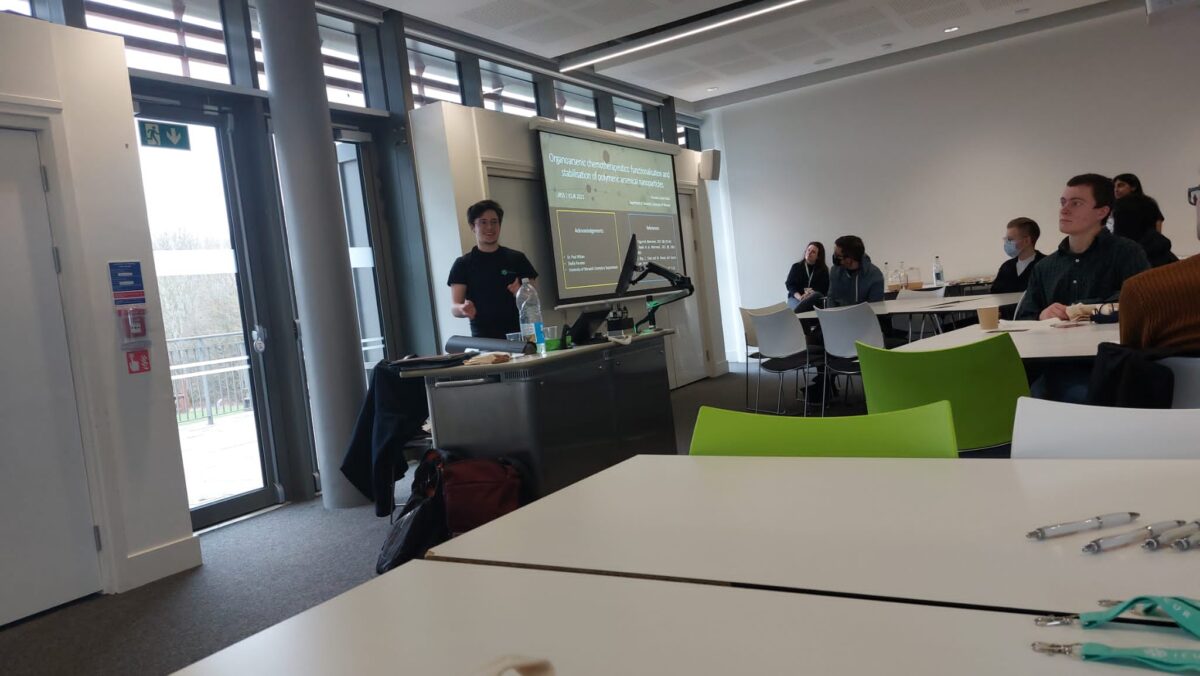
On the 9th of February, we held our first in-person event of the year on the University of Warwick campus! Here we discussed what exactly ICUR is, walked through an example of a student presentation, and discussed what we do as student directors. With so much information being covered and questions pouring in, we thought we’d give you a quick rundown of what we discussed:
- What is ICUR? – Lynsey McCulloh (IATL – Journal and Conferences Coordinator)
- What is Research?
- Beyond its standard definition, research is endlessly diverse and undertaken by academics and students alike.
- It can be divided by methodology into qualitative and quantitative research.
- It can also be divided by discipline into Sciences (Chemistry, Maths, Computer Science etc.), Social Sciences (Politics, Economics, Law etc.) alongside the Arts and Humanities (History, Fine Art, Theatre etc.)
- At ICUR you can submit an abstract from absolutely any field!
- Why a conference? – Conferences provide an opportunity for researchers to share their findings and receive feedback to further their study.
- What is ICUR?
- ICUR is the ‘International Conference of Undergraduate Research’, managed by the Monash Warwick Alliance.
- Students from our partner institutions, and across a variety of disciplines, present their research online or at their home institution in panels over two days in late September.
- As long as you undertook your research while you were an undergraduate student, you can present at ICUR up to 6 months after graduating!
- What will you gain from ICUR? – Two key skills you will gain from ICUR are abstract writing and presentation skills. Keep an eye on our blog for upcoming articles which will discuss these in more detail!
- What is Research?
- Example of what a Student Presentation could look like – Fernando Nodal (Student Director and 2021 Student Presenter)
- Under the Department of Chemistry, Fernando undertook a summer research project on ‘Organoarsenic chemotherapeutics: functionalisation and stabilisation of polymeric arsenical nanoparticles’.
- Starting with a structured introduction, Fernando outlined the basis for his research project. Firstly, he addressed the clinical renaissance of arsenic-containing drugs, and then explained why his specific area of research is so important by breaking down PISA as a route to arsenic-containing nanoparticles.
- Then, he laid out his method and proposed research plan accompanied by a series of diagrams which highlighted his points.
- Following from this, he walked us through the relevant data and results of his project – where he was able to reach a conclusion backed up by repeat experiments and patterns in his collected data.
- After laying out his conclusions succinctly, Fernando then outlined what future work should aim to investigate, the importance of such research and what the state of the field looks like to him.
- If you’d like a closer look at this presentation, come along to our next online event where Fernando will walk you through his slides step by step. Scroll to the bottom of this article for more info!
- What do we do as student directors? – Zaamia Arif (Student Director)
- Managing social media pages – Our team of student directors manage all the ICUR social media pages including Instagram, Facebook and LinkedIn. We keep you updated on the ICUR application schedule, useful events and other student research opportunities you might be interested in.
- Running smaller events – Throughout the year we run a number of small events on campus and online based on what we think would be useful for students applying to be a part of ICUR. We are here to help YOU, so direct message us on Instagram @icurstudents to let us know what events you’d like us to run!
- Managing the Impact blog – If you’re reading this article you’ve found your way to our Impact blog, where we provide helpful hints and tips, talk about past experiences and all the ways ICUR can benefit you.
- Reviewing abstract submissions – When abstracts are submitted we work with the rest of the team at ICUR to read and review every single one.
- During ICUR – When the conference takes place in September, we also help with facilitating training sessions, managing sessions and volunteers, and chairing international panels.
Didn’t get the chance to attend? No worries! We will be running an online drop-in session later this term where we will go through these topics in more detail, and we will also have an extended Q&A session for all your specific queries.
Keep an eye on our social media pages, @icurstudents, for further details on how to sign up – and be sure to join our Teams space through this page!